Reflective Window Insulation Roll – Home Office Climate Control for Glare-Prone Workstations
Reflective Window Insulation Roll – Home Office Climate Control for Glare-Prone Workstations
Couldn't load pickup availability
Why you'll love it
- Year-round dual-purpose insulation that handles both summer heat and winter cold loss in one roll
- Removable hook-and-loop mounting makes it renter-friendly and damage-free compared to permanent window film
- No professional installation needed — a utility knife and the included tape are enough
- Fits non-standard spaces like RV windows, garage doors, and greenhouse panels where traditional insulation is hard to find
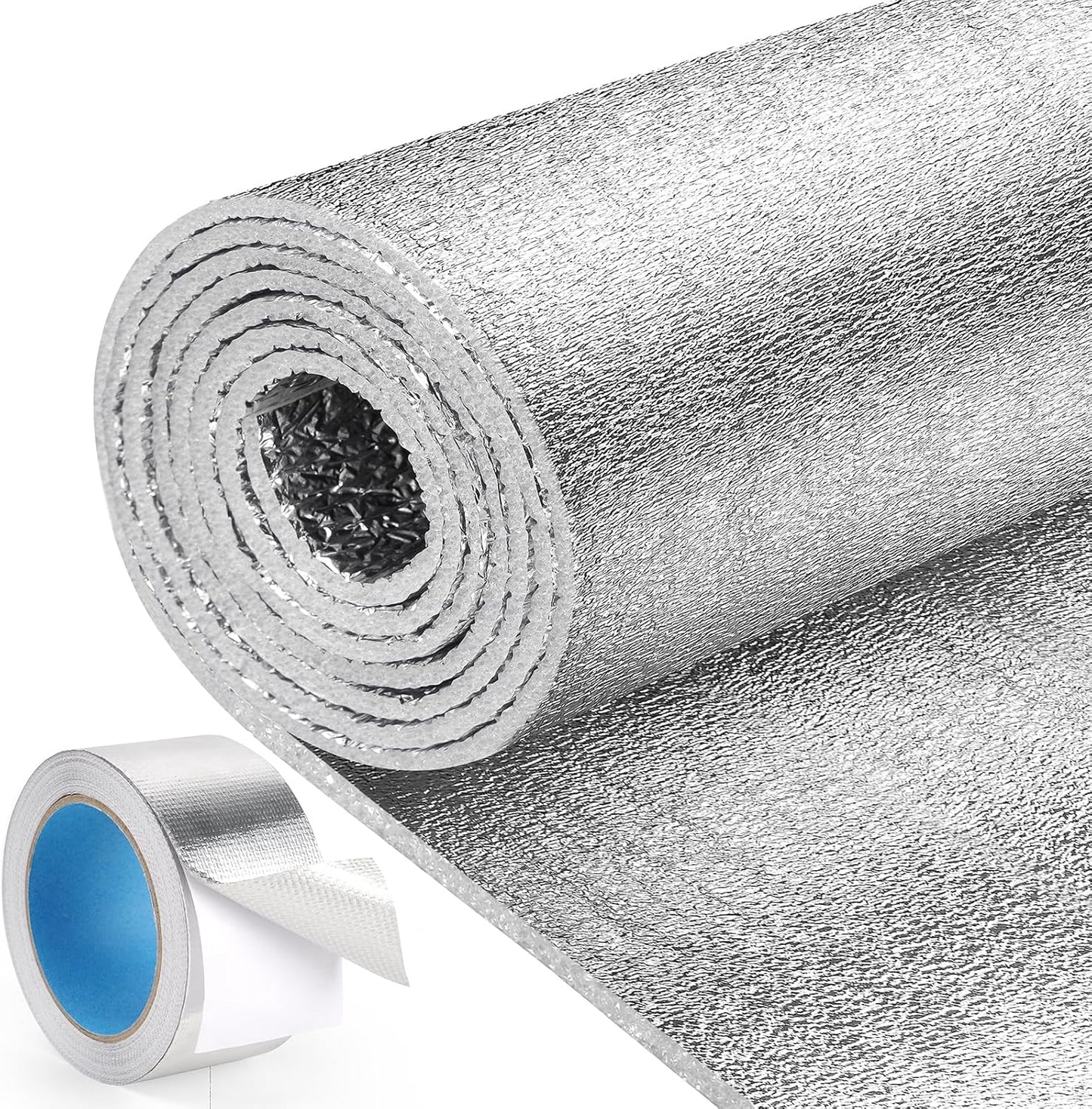
- Three-layer aluminum-and-foam construction delivers radiant barrier performance at a DIY price point
- Four size options let buyers match coverage to their specific project instead of over-buying
Perfect for
- Cut-to-size window insulation for winter heat retention in old or drafty homes
- Blocking radiant summer heat through west-facing or sun-exposed windows
- Reducing RV interior temperature swings during hot or cold travel seasons
- Lining garage door panels to create a more usable workspace year-round
- Lowering monthly energy bills by adding a removable radiant barrier to single-pane windows
Frequently Asked Questions
Will it help my home office stay a consistent temperature during long work sessions?
Yes. The reflective barrier blocks radiant heat in summer and holds interior heat in winter, so your home office temperature stays stable through afternoon meetings and evening focus blocks without the HVAC cycling constantly.
Can I mount it on a west-facing window that heats up my desk area in the afternoon?
Yes. West-facing windows are the strongest use case for a radiant barrier. A cut-to-size panel cuts the radiant heat load on your desk and reduces eye strain from harsh afternoon sun.
Does it reduce glare on my computer monitor?
The reflective foil faces the glass and the foam core softens and diffuses incoming light, so direct glare on a monitor is reduced while the room stays bright enough to work comfortably.
Can I use it in a detached office shed that isn't connected to the main HVAC?
Yes. Many buyers use the panels in uninsulated backyard office sheds where a space heater or window AC can finally keep up, because the radiant barrier stops heat loss through the shed's single-pane windows.
Is it suitable for a workshop or maker space with a garage door?
Yes. Cut panels can be lined inside each garage door section, turning an uninsulated metal door into a workable thermal boundary so the workshop stays usable in both summer and winter.
Will it help me focus better by removing temperature distractions?
Temperature swings are a common focus killer. By keeping the room within a narrow comfort range, the barrier removes the urge to get up and adjust the thermostat, supporting longer deep-work blocks.
Can I install it before a big work deadline without disrupting the room?
Installation takes minutes per window with a utility knife and the included hook-and-loop pads. There is no spray, no smell, and no cure time, so the workspace is immediately usable.
Does it work in a converted attic studio with sloped ceilings and odd-shaped windows?
Yes. The cut-to-fit format is ideal for dormer, gable, and skylight-shaped windows in attic studios where off-the-shelf insulation products simply do not fit.
Will it help a server closet or equipment room in a home office stay cooler?
Mounting a panel on the window behind electronics reduces solar heat gain around networking gear and battery backups, helping sensitive equipment stay within its operating temperature range.
Can I use it to insulate a garage door for a side-hustle workshop?
Yes. Cut panels sized to each garage door section and mount them with hook-and-loop pads. The reflective foil bounces summer heat back outside and keeps winter heat in, so the workspace is comfortable year-round.
Is it more effective than a window AC unit for a small home office?
It serves a different role. The barrier reduces the load on your AC by blocking radiant heat before it enters, so a small window unit can cool the room faster and run less often, lowering energy use.
How does it compare to installing a smart thermostat for workspace comfort?
A smart thermostat controls when the HVAC runs, but it cannot stop heat from pouring through a single-pane window. The barrier cuts the heat load at the source, which is what actually stabilizes the room temperature.
Is this better than buying a portable space heater for a cold workshop?
A space heater creates warmth, but a drafty window pulls that warmth out as fast as it is produced. The barrier stops the heat loss so the heater's output actually stays in the room and your energy bill drops.
Will it make my workshop too quiet or change the acoustics?
The thin foam core absorbs a small amount of sound, which can actually soften the hard echo in a metal garage or shed workshop, but it will not noticeably muffle music or conversation.
Can I leave the panels in place permanently while I work?
Yes. Once installed, the panels are meant to stay in place year-round. They can be peeled off in seconds when you need to clean the window or let in full light for a project.
Is it safe to mount above a desk where I might bump it?
Yes. The foam-backed panel is soft to the touch and has no sharp edges. It sits flush against the window, so it is well out of the way of an office chair or standing desk.
How do I install the reflective insulation roll on a window?
Measure the inside of the window frame, cut the panel to size with a utility knife or scissors, attach the included hook-and-loop adhesive pads to the frame, and press the panel firmly in place. Use the included aluminum foil tape to seal any seams between panels for maximum thermal performance.
Can this product be used on both winter cold and summer heat?
Yes. The double-sided aluminum foil reflects radiant heat in both directions, keeping summer sun out and winter interior heat in, which is why it works as a year-round dual-purpose insulation product.
How do I remove the hook-and-loop pads without damaging the window frame?
Slowly peel each pad off the frame at a low angle. The adhesive is designed to release cleanly from most painted, finished, and vinyl surfaces. If any residue remains, it lifts off with a little rubbing alcohol or a mild citrus-based cleaner.
Will this fit non-standard window sizes like RV windows or garage door windows?
Yes. The material is sold in cut-to-fit formats and trims easily with a utility knife, so it conforms to the unique dimensions of RV windows, camper vans, garage door panels, and greenhouse frames.
Does it work on single-pane, double-pane, and storm windows?
Yes. It improves thermal performance on single-pane windows (the biggest gain), adds a reflective layer to double-pane glass, and can be used on storm window interiors to further reduce drafts.
What is included in the box when I order this kit?
You receive one roll of double-sided aluminum foil insulation, one roll of heavy-duty aluminum foil tape for seam sealing, and 65 hook-and-loop adhesive pads for tool-free mounting. You will need only a utility knife or scissors to complete installation.
Is the material safe to use in a child's bedroom or nursery?
The closed-cell polyethylene foam and aluminum foil are non-toxic, do not off-gas, and have no sharp edges once installed. The panel sits flush against the window, well out of a child's reach, and poses no special safety concern in a nursery.
Will the hook-and-loop adhesive hold through very hot or very cold weather?
The adhesive is rated for a wide temperature range typical of residential and RV applications, and the aluminum foil surface is waterproof, so humidity and temperature swings do not weaken the bond.
What is the difference between reflective insulation and traditional fiberglass batt insulation?
Fiberglass batts slow conductive heat transfer through walls and attics but do not block radiant heat. Reflective foil insulation bounces radiant heat away from a surface, making it ideal for windows, garage doors, and other glazed or thin barriers where radiant heat is the dominant loss.